
In addition to low-temperature usage, packaging film for frozen foods must also have sufficient moisture resistance, tear resistance, and puncture resistance and must also seal well when heated. LDPE and LLDPE can both be specified for packaging of frozen foods; however, they are used to solve different problems.
For the safest way to buy you have to look at the product and the packaging. A smooth surface of a frozen portion, sharp edges of products and wet food all put different stresses on packaging materials and seals. So first read the guide to freezer and storage bags when comparing normal storage with freezer applications.
Why Does PE Work Well in Frozen Food Packaging?
PE Provides Flexibility and Moisture Protection
The polyethylene film is used as an inner lining or as heat seal material. The flexible, moisture repellent film can be in contact with products in many packaging applications. It allows the bag to follow the product, as opposed to the corners of the bag being forced to seal at one point.
Frozen foods often create a different handling situation than ambient foods. Hard, cold food in packs or even in cartons can be less tolerant in packaging than similar food at ambient temperatures. PE packaging should be selected with reference to the packed article and its handling, not just with the word ‘freezer’ as a criterion.
A Single Film Grade Cannot Solve Every Barrier Need
LDPE is water resistant, moisture resistant, cold resistant and has good chemical stability. As LDPE also has high air permeability, poor aroma retention and limited oil resistance, products which are oily, easily oxidized or suffer from aroma loss in packaging may require higher barrier types or even composite packaging.
Frozen products also benefit from a sealing layer of PE, but this does not necessarily have to include all of the required protection for the food as a complete barrier. The degree of protection against moisture, oxygen, oil, aroma etc. depends on the storage time and distribution conditions of the food.
LDPE vs LLDPE: Which PE Film Fits the Job?
LDPE for Flexible General-Purpose Frozen Packaging
LDPE film is a soft, transparent, non-toxic and odorless film. Its low-temperature heat-sealing properties make it a common adhesive or heat-sealing layer in composite films. The film is generally suitable for all kinds of moisture protecting packaging, also for storage of deep-frozen food.
Limitations of standard LDPE packaging film include lack of oil resistance, low aroma barrier properties and low heat resistance. For simple shapes frozen products with average abuse, standard LDPE could be a starting point but must be tested for the final seal.
LLDPE for Tear, Impact, and Puncture Demands
LLDPE film has higher tensile and impact strength and better tear resistance and puncture resistance than LDPE while retaining the basic functions of packaging with LDPE. LLDPE film can retain useful strength even at a reduced thickness, depending on the film grade and application. This film is therefore also suitable for packaging of frozen foods and for very heavy-duty applications.
LDPE becomes relevant when products have hard edges, are handled roughly or when a thin film is required for material saving purposes. The strength of LLDPE needs to be matched with the sealing layer and the corresponding machine settings in order to achieve a sufficient seal.
How Should PE Film and Heat Seals Be Matched?
Choose the Inner Layer Around the Sealing Window
When making a composite bag the inner layer of PE is typically the sealing layer. The melting behavior, the sealing temperature, contact pressure, dwell time and cooling of this layer all affect the heat seal. Sealing at too high a temperature can damage the outer layer, whether this is a film or printed surface. Sealing at too low a temperature may produce a seal that looks closed but leaks on subsequent handling.
For PE-based zipper structures it is necessary to match these even more closely. A modified facing PE, a low temperature sealing PE as well as a low temperature zipper must all operate within the same processing window. Failure to match up any of these can result in poorly sealing edges, a crushed surface or sealed edges that stretch.
Keep Moisture Away From the Seal Area
Moist food tends to leave residue in the contact area of the sealing plug and will also create imperfections in the film stack. Increasing film gauge is not a solution and involves checking the method of packaging, headspace, seal width, machine cleanliness and how the product actually behaves in the filling process.
A frozen food sample is filled up to the required portion size for the test and sealed in the same way as for normal use. After freezing the sample it is opened after it has been moved around and packed into cartons. A test sample that passes when empty gives very little information about a wet product under normal use.
What Should Buyers Include in a PE Film Specification?
Describe the Product Before Asking for a Thickness
A useful product specification contains information about the type of product, packed dimensions and weight, edge form, moisture or oil content, storage conditions, storage time and handling. It also indicates if the film is used as a single layer, in a laminated version or as inner layer of a zipper or three-side-seal bag.
Without more information it is impossible to evaluate a thickness request. A thin LLDPE film can be outperformed by a thick LDPE film in some applications whereas in others the reverse could be true. Thickness is a design variable and must not be confused with a performance specification.
Confirm Film, Seal, and Package Together
These samples should mimic the bag’s width, length and film type, as well as the width of the seal and any zippers. The packages should be examined before freezing, after they have been frozen and after they have been subjected to normal use. Look for punctures, whitening, edge cracking, seal lift and any increase in the force required to open or close the package.
This PE and PP bag comparison is intended for buyers comparing materials. The best comparison however is always against the specific food and packaging application with which you work.
How Can Hualei Support a Custom PE Packaging Discussion?
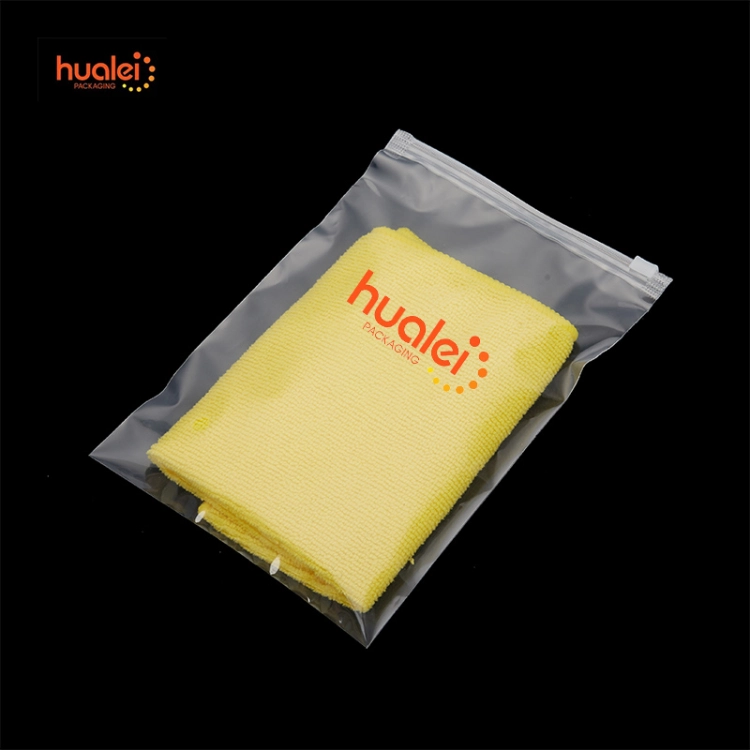
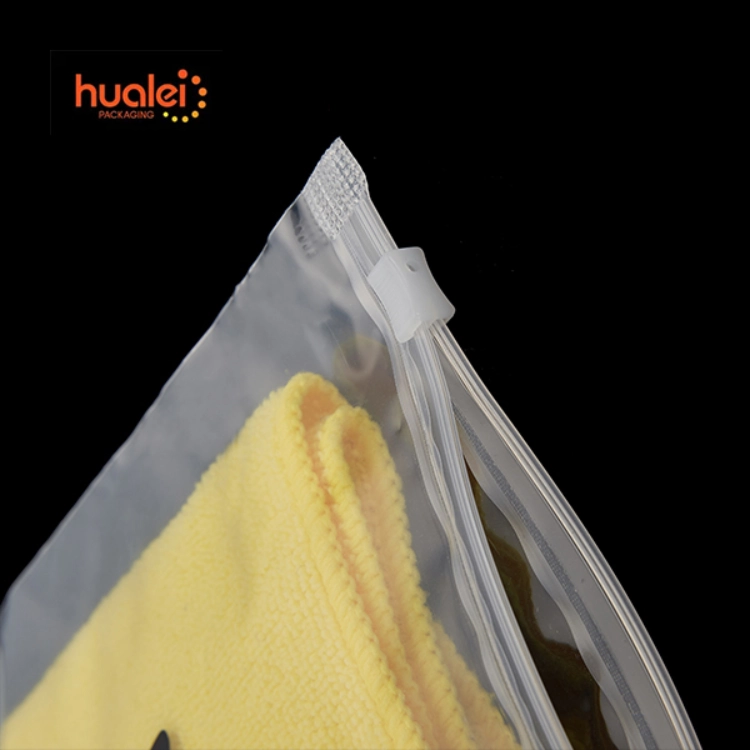
Hualei’s Zipper bag01 is available in listed sizes ranging from 14 × 20 cm to 50 × 60 cm, with thickness options from 50 to 90 microns. In addition to customer logo and design printing the item has an MOQ of 20,000 pieces. The above listing is for a custom made zipper-bag reference and does not necessarily confirm that all sizes and thicknesses are suitable for all frozen foods.
A serious quotation or sample request would include dimensions of packed product, food type, storage temperature, required seal type, expected behavior regarding opening/re-sealing, required artwork and quantity required. Manufacturer then reviews Film & Zipper as complete package.
The best PE film for your purposes is the one that will keep your products safe and ensure that the seal remains intact even after freezing, filling and other manipulations. Although LDPE and LLDPE are often good starting points, the only real test of a PE film is a filled sample tested under relevant conditions.
Conclusion
Both LDPE and LLDPE can be used for packaging frozen foods. The choice between them is largely dependent on flexibility, puncture resistance, the required barrier properties, product shape and packaging line used.
Determine product and storage conditions first. Approve PE film and seal a fully filled sample. Test filled sample before freezing, after freezing and after normal storage.
FAQ
Is LDPE suitable for frozen food packaging?
LDPE is generally used for packaging of products requiring general moisture protection as well as for frozen foods. It is particularly suited as a flexible sealing layer, and must be checked for its air permeability, aroma retention, oil resistance and heat resistance as required by the food.
When should I choose LLDPE instead of LDPE?
If the package requires more tensile strength, impact resistance, tear or puncture resistance or if you are interested in evaluating a thinner film, then LLDPE might be worth looking at. Ultimately, the final film choice will also depend on the shape of your product and the heat-sealing process.
Does thicker PE film always make a freezer package safer?
No. Thickness alone does not help. A proper material structure, clean sealing surface, proper temperature and a filled-product test are required. Even a thick film does not help if it is not properly matched to the other parts. It can leak or crack.
How should PE film be tested for frozen food?
Test the intended product and portion size, open, fill, seal, and freeze test product under the conditions that you intend to use. Examine the film and seals for signs of puncture, edge stress, seal lift and leakage after handling and carton packing.