
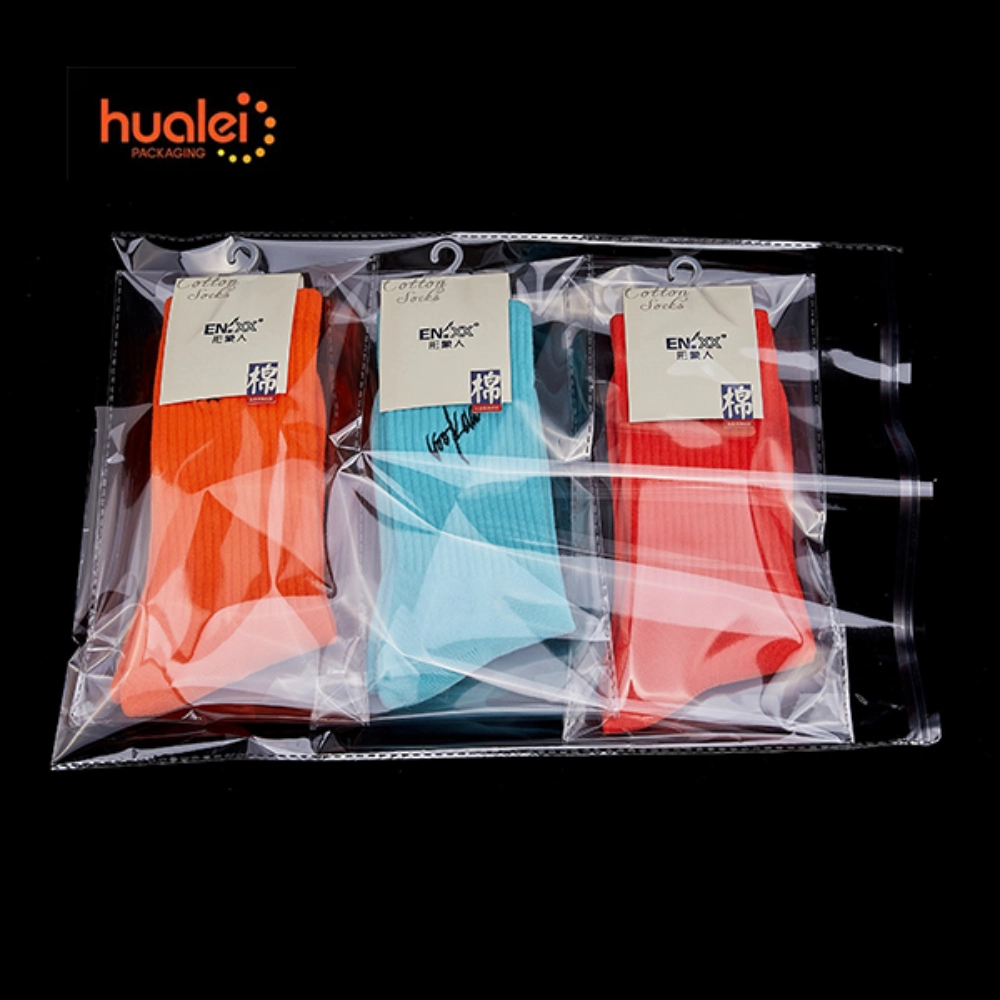
There are many different sizes of OPP plastic bags. For example small bags can hold items such as socks and underwear, and can also be used to store items such as jewelry and stationery. Medium sized bags are often best for holding items such as T-shirts and shirts. However larger bags are required for holding items such as jeans, sweaters, coats, bedding and items made up of multiple articles of clothing.
For clothing packaging, a common size range is 18 × 30 + 4 cm to 40 × 60 + 4 cm. The extra 4 cm normally means the adhesive flap. That said, the number printed in a catalog is only a reference. You still need to check the garment after folding. Fabric thickness, tags, cardboard inserts, and the way your workers pack the item can all change the final size.
What Sizes Do OPP Plastic Bags Commonly Come In?
OPP plastic bags are generally available in three dimensions: small, medium and large. Factories, however, are able to produce custom dimensions when the ‘standard’ sizes are not suitable.
The size should follow the product. It should not be the other way around. Buyers sometimes choose a bag because it is already in stock, then try to change the folding method to make the garment fit. That usually creates more work on the packing line.
The sizes below are available for the OPP Bag Clothing range. They cover small apparel, standard clothing, and larger folded products.
As a quick starting point, the following OPP plastic bag size chart covers common clothing and retail packaging applications:
| OPP Bag Size | Recommended Starting Application |
| 18 × 30 + 4 cm | Underwear, socks, and compact accessories |
| 22 × 32 + 4 cm | Small folded T-shirts and light apparel |
| 25 × 36 + 4 cm | Standard T-shirts, shirts, and scarves |
| 28 × 41 + 4 cm | Larger shirts, slippers, and light knitwear |
| 30 × 44 + 4 cm | Trousers, sweaters, and clothing sets |
| 32 × 46 + 4 cm | Jeans, thick knitwear, and larger garments |
| 35 × 46 + 4 cm | Wide folded clothing and multi-piece packs |
| 40 × 60 + 4 cm | Coats, bedding, and bulky garments |
Small OPP Bags for Accessories and Lightweight Products
These small OPP bags are generally used for packaging items such as socks, underwear, jewelry, hair clips, pens and pencils, stationery, small gifts and cosmetic samples. All of these items appear to be easy to pack in OPP bags but there are a few details to be aware of.
Space is taken up by a backing card, price label, barcode sticker, or hanging card. For a card head packaging bag, the reinforced header and hanging-hole area should also be counted separately from the usable pouch body. When a bag is only slightly wider than the product, workers may find it difficult to insert the item without putting pressure on the side seal. Furthermore, the bag can split when the product has a hard edge.
A little spare room is useful. Too much spare room is not. The product should still sit flat and look tidy once packed.
Medium OPP Bags for T-Shirts and Retail Products
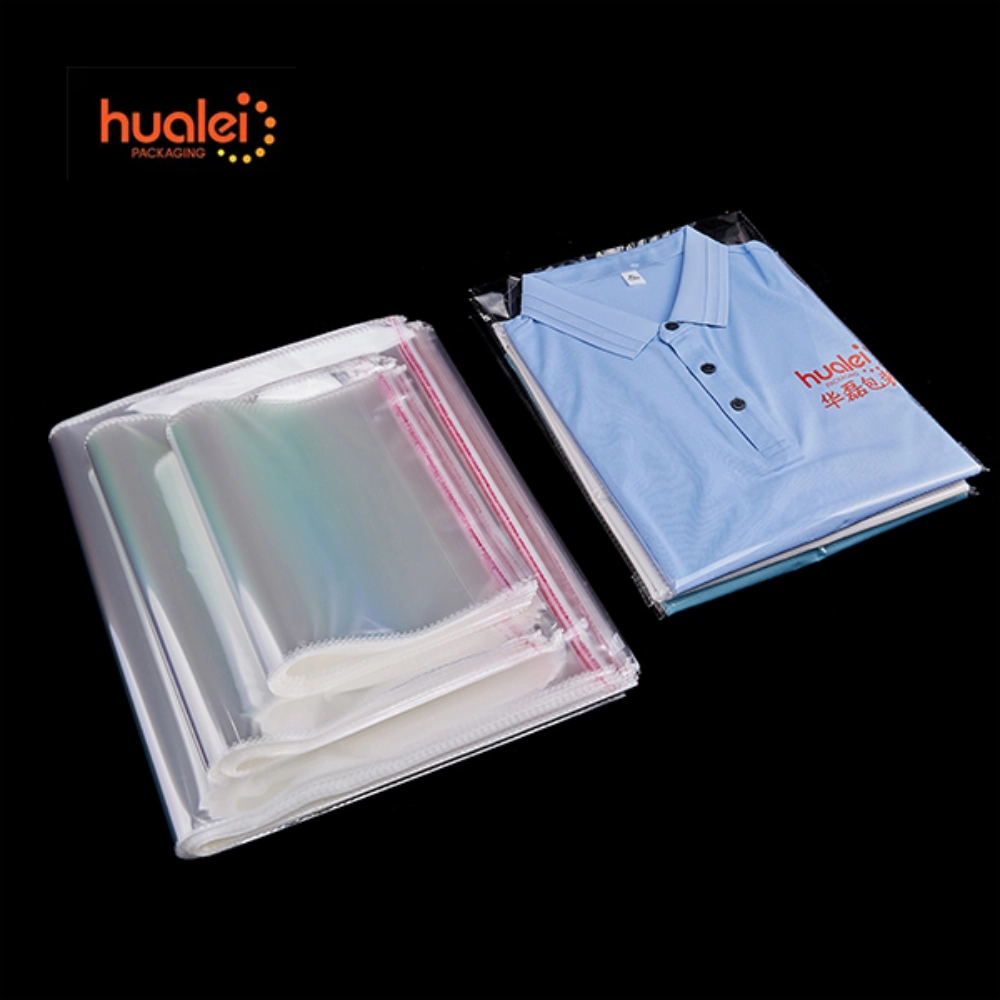
Medium OPP bags are commonly used for clothing packaging of average size. This would include, for example, t-shirts, shirts, scarves, slippers, thin trousers and light knitwear.
Same clothing items can fit in more than one bag size. Thin polyester T-shirts will require less space than heavy cotton T-shirts. Folded up shirts with cardboard supports will require extra width in the bag. A large care label can also affect how the flap closes.
For that reason, use an OPP plastic bag size chart as a starting point, then confirm the final size with the actual folded product.
Large and Custom OPP Bags for Bulky Products
Large OPP plastic bags are used for jeans, thick sweaters, coats, bedding, and multi-piece sets. These products need room not only in length and width, but also in depth.
A thick garment pulls the front and back film around the product. This reduces the usable width. On paper, the bag may look large enough. Once the garment goes inside, the adhesive flap may no longer reach the sealing area properly.
Custom size OPP bags make sense when the standard options are always too loose or too tight. A better fit can reduce film use, improve carton loading, and keep the packed item from sliding around during transport.
How Should You Read an OPP Bag Size Chart?
Bag dimensions are often written as three numbers. A common example is 25 × 36 + 4 cm. Most buyers can guess the first two figures, but the last number still causes confusion.
It is worth confirming the measuring method before you approve a quotation. Different factories may write the same bag structure in slightly different ways.
Width, Length, and Adhesive Flap
For a bag marked 25 × 36 + 4 cm, 25 cm normally means the width. The 36 cm figure is the main body length. The additional 4 cm is usually the self-adhesive flap.
This format is common for clothing bags, but it is not a fixed international rule. Card head packaging bags, bottom-fold bags, and other hanging formats may be measured differently because the header or display section can sit outside the usable product area.
For custom card head packaging bags, ask the supplier for a simple drawing that separates the usable pouch body, header size, hanging-hole position, and closure area. This avoids confusion when several sizes or display formats are included in one order.
External Dimensions and Usable Internal Space
Finished external size and usable internal size are not exactly the same. Side seals take up a small part of the width. A bottom seal uses some length. A header section may also sit outside the space used by the product.
The difference may only be a few millimeters, but that can matter when the fit is tight. It matters even more for thick garments.
Your specification should clearly show the finished width, finished length, flap size, seal width, and gusset size where needed. It is also useful to state whether the quoted size is internal or external.
Which OPP Bag Size Fits Different Clothing Products?
A size chart helps narrow the choice. It cannot tell you with complete certainty that one bag will fit every product in the same category.
These applications are only starting points. The final result depends on fabric weight, garment size, folding method, inserts, and the amount of packing space you want.
Sizes for Underwear, T-Shirts, and Shirts
Underwear and socks usually work with smaller OPP plastic bag sizes. Thin T-shirts may also fit compact bags, provided there is enough room for the flap and labels.
Do not forget the insert. A piece of cardboard can make the package wider and less flexible. It may also create a hard corner that presses against the film.
Shirts need a little more care. If the bag is too narrow, the collar may bend. If it is too long, the extra film folds over and makes the package look untidy. Testing two nearby sizes is normally the quickest way to decide.
Sizes for Jeans, Knitwear, and Larger Garments
Jeans and knitwear take up more space after folding. Their flat measurements may look close to those of a shirt, but the packed thickness is quite different.
Put the item in the bag and close the flap. Then leave several packed pieces stacked for a few hours. Check whether the adhesive lifts, whether the side seals are under pressure, and whether the bag still lies flat.
This is a simple test, but it catches problems that are easy to miss on a specification sheet.
How Should You Measure a Product Before Choosing an OPP Bag?
Measure the product in the same condition it will be packed. This sounds obvious, though many size mistakes start because the garment was measured before folding.
The final sample should include everything that goes into the bag.
Measure the Final Folded Product
Fold the garment using the actual packing method. Add the tag, cardboard support, tissue, care card, sticker, and any other insert.
Measure the final width and length. Then check the thickest point. For soft goods, measure several pieces rather than one. Different fabric batches and different workers can create small size changes.
You do not need a large allowance, but you do need enough room to cover those normal differences.
Leave Enough Room for Packing and Sealing
The product should slide into the opening without scraping the side seals. Workers should not need to force it in or push the corners down by hand.
The adhesive flap also needs a flat surface. If the garment reaches too close to the top edge, the flap may stick partly to the product instead of the bag.
An oversized bag creates another problem. The garment moves around, the film wrinkles, and the carton may hold fewer pieces. A clean fit is usually somewhere between these two extremes.
Approve a Physical Sample Before Production
A physical sample tells you much more than a size list. You can check packing speed, flap position, seal strength, film feel, and the appearance of the finished package.
For printed bags, insert the real garment and check where the logo sits. A design that looks centered on an empty bag may shift once the product is inside.
Pack several samples into the planned export carton as well. This shows whether the bag size works with the carton quantity and stacking direction.
Does OPP Bag Thickness Affect the Size You Need?
Thickness and size are different specifications. The size controls fit. Thickness controls strength, stiffness, puncture resistance, and cost.
They still need to be checked together. A large thin bag may tear under a heavy garment. A very thick bag may be hard to fold and seal if the size is already too tight.
The OPP Bag Clothing packaging option is available in 17 mic, 22 mic, 25 mic, 30 mic, 35 mic, 40 mic, 45 mic, and 53 mic.
Lightweight Thickness for Small and Soft Products
Thicknesses from 17 mic to 25 mic are often used for socks, underwear, light T-shirts, and other soft goods.
These options keep the bag light and help control cost on large-volume orders. They are less suitable for products with hard tags, metal parts, sharp corners, or thick inserts.
A lighter bag is fine when the product and handling method allow it. It should not be chosen only because the unit price is lower.
Medium Thickness for Daily Clothing Packaging
Thirty mic and 35 mic are practical choices for many normal apparel orders. Shirts, trousers, sweaters, slippers, and general retail products often use this range.
The film has more body than the lighter grades. It usually feels more stable during packing and holds its shape better on the shelf.
For many buyers, this range is a reasonable middle point between cost and protection.
Heavy-Duty Thickness for Bulky Products
Thicknesses from 40 mic to 53 mic suit jeans, heavy knitwear, thick clothing, and products that face more handling during storage and shipment.
The extra thickness improves puncture resistance and gives the bag a firmer feel. It does not correct a poor size choice.
If the bag is too narrow, thicker film may make packing even harder. Test the size, thickness, adhesive, and side seals as one complete package.
Why Is OPP Bag Clothing a Practical Packaging Choice?
Once the size and thickness are roughly decided, you need a product range that can cover several garment types without changing the whole packaging setup.
Yiwu Hualei Packaging Co., Ltd. has worked with flexible plastic packaging since 1998. Its production includes BOPP bags, PE bags, CPP bags, printing bags, zipper bags, flower film, and BOPP film. The company operates 50 production lines, which gives buyers room to handle repeat orders, mixed sizes, and custom printing under one project.
The company’s product range covers packaging for clothing, gifts, food, and daily retail goods. OPP Bag Clothing is the most relevant option here because the listed sizes run from small apparel bags to much larger clothing packaging.
Clear Display and Simple Sealing
OPP Bag Clothing uses clear BOPP film. The garment remains visible, which helps with warehouse checks, wholesale sorting, retail display, and e-commerce packing.
The self-adhesive closure is also straightforward. Workers put the garment inside, remove the release strip, fold the flap, and press it closed. No separate tape is needed.
On a small order, this may not seem important. On a packing line handling thousands of pieces, it saves time and keeps the finished bags more consistent.
Custom Printing for Retail Orders
Customer logos and designs can be printed on the bags. You can also add product information, care notes, or simple retail graphics.
Printing should be planned around the product inside the bag. The logo position, flap direction, and visible area all need to be confirmed on a filled sample.
Buyers can check the company’s factory background and packaging blog before sending an inquiry. A useful quotation request should include finished size, thickness, flap size, printing file, quantity, packing method, and destination.
Conclusion
OPP plastic bags come in many standard and custom sizes. Clothing packaging commonly uses sizes from 18 × 30 + 4 cm to 40 × 60 + 4 cm, covering underwear, T-shirts, shirts, jeans, knitwear, coats, and bedding.
The right size comes from the packed product. Fold the garment first. Add every tag and insert. Measure several samples, then test the bag before bulk production.
Thickness matters as well. Light products may use 17 mic to 25 mic. Regular clothing often works with 30 mic or 35 mic. Heavy garments may need 40 mic to 53 mic.
Yiwu Hualei Packaging Co., Ltd. offers these size and thickness options through OPP Bag Clothing, together with self-adhesive sealing and custom printing. Buyers who need sample support, production service, or help checking an order specification can use the company’s contact page before confirming production.
FAQ
What Is the Most Common Size for an OPP Plastic Bag?
There is no single common size for every product. Small sizes suit socks and underwear, while medium and large sizes are used for T-shirts, shirts, jeans, knitwear, and bulky clothing.
What Does “+4 cm” Mean in an OPP Bag Size?
The extra 4 cm normally refers to the self-adhesive flap, though you should confirm the measuring method with the supplier before ordering.
How Do You Choose an OPP Bag Size for a T-Shirt?
Fold the T-shirt in its final packing form, add all tags and inserts, measure its width, length, and thickness, then test two nearby bag sizes.
Can OPP Plastic Bags Be Made in Custom Sizes?
Yes, custom size OPP bags can be made when standard sizes leave too much loose film or do not provide enough room for the product and flap.
How Do You Measure a Card Head Packaging Bag?
Measure the usable pouch body separately from the card head packaging bag section. Confirm the finished width and length, header height, hanging-hole position, seal width, and whether the quoted dimensions refer to internal or external size. These checks are especially useful when ordering custom hanging bags for retail display.
Which OPP Bag Thickness Is Suitable for Clothing?
Light garments may use 17 mic to 25 mic, normal retail clothing often uses 30 mic to 35 mic, and heavier products may need 40 mic to 53 mic.