
A packaging bag can fit a product and still perform poorly on a retail display. OPP card head bags need more than the correct width and length. The usable bag body, card head, hanging hole, film thickness, closure, printing area, and product weight all affect how the finished package works.
For buyers, the goal is to match these elements before bulk production. The bag should be easy to load, hang correctly on the intended fixture, keep the product visible, and leave enough room for branding.
Yiwu Hualei Packaging Co., Ltd. manufactures flexible packaging including OPP/BOPP bags, PE bags, CPP bags, printed bags, zipper bags, flower film, and BOPP film. Hualei operates 50 production lines for flexible packaging production. Its OPP Card Head Bag supports custom sizing, multiple film thicknesses, and customer logo or design printing.
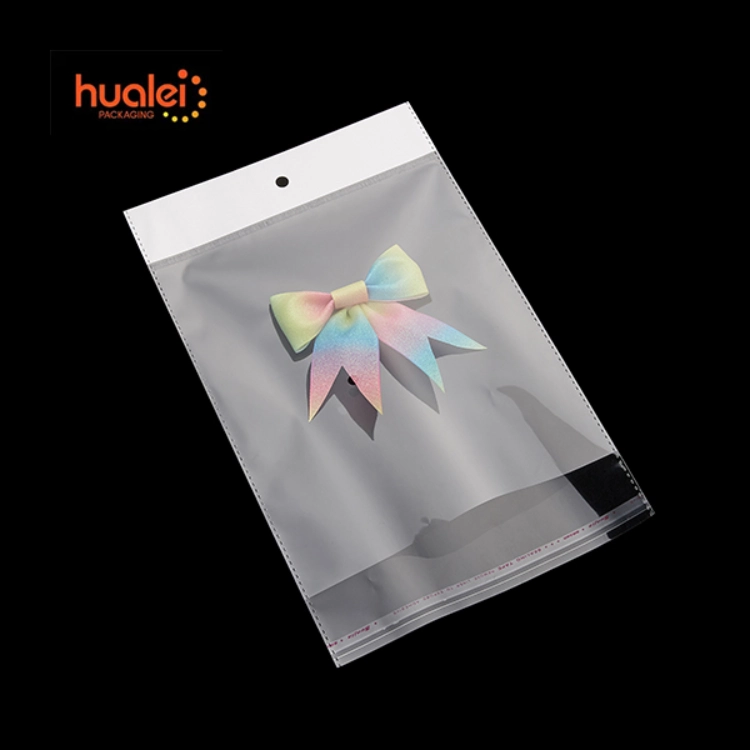
What Makes an OPP Card Head Bag Suitable for Hanging Retail Display?
A card head bag differs from an ordinary flat bag because its top section is part of the retail display structure. The header carries the hanging point, while the clear body contains and presents the product.
For opp card head bags, the package therefore needs to work with both the product and the retail fixture.
A Hanging Structure Designed for Pegs and Display Racks
Hualei’s OPP Card Head Bag uses a card head hanging hole designed for retail pegs, hooks, and display racks. The bag also uses a self-adhesive closure, keeping the sealing area separate from the hanging area.
The header should provide enough space for the hole and required printed information without becoming unnecessarily large. If it is too small, the hanging hole, branding, and product body may compete for space. If it is too large, the package may use more material and take up more display area without improving function.
For retail display packaging bags, header dimensions should follow the packed product, the hook or peg being used, and the amount of branding required.
Clear Packaging That Keeps the Product Visible
The OPP Card Head Bag is suitable for jewelry, accessories, gifts, and other small retail goods. Its transparent body keeps the product visible, while the card head provides space for hanging and product information.
This structure is useful when customers need to see the color, shape, finish, or details of the item before buying. A jewelry item, keychain, or cosmetic accessory may lose part of its visual value if the main bag area is heavily covered with print.
In many cases, placing the logo, barcode, product name, or SKU on the card head allows the bag body to remain clear.
Product Categories That Benefit Most From Hanging Display
Card head packaging is well suited to compact products displayed on peg hooks or vertical racks, such as jewelry, stationery, small accessories, gift items, and cosmetic accessories.
However, not every small product needs a card head. Folded garments may work better in a larger flat bag, while products intended to stand on shelves may need another package structure.
The display method should therefore be considered before the bag format is selected.
How Should You Match the Bag Size and Header to the Packed Product?
Size selection is one of the main areas where packaging projects go wrong. Buyers sometimes provide only the dimensions of the bare product, even though the packed item may also include a backing card, label, insert, or accessory.
With opp card head bags, the total bag length also includes the card head and sealing area, so the usable space must be calculated separately.
Measure the Packed Product Instead of the Product Alone
Measurements should be taken from the product in the condition in which it will actually be packed.
A flat accessory with a backing card may require more width than the product itself. A three-dimensional item may also push the film outward, even if its front dimensions appear small.
The correct card head packaging bag size should leave enough clearance for easy loading without creating too much empty space. A bag that is too tight may place stress on the side seals or slow packing. A bag that is too loose may allow the product to move or hang unevenly.
For products with hard corners or protruding parts, the shape of the item should be considered as carefully as its basic dimensions.
Separate the Usable Bag Area From the Card Head Area
Total bag length should not be treated as usable product length.
A finished card head bag normally includes the product body, card head, hanging-hole area, and adhesive or sealing section. Hualei supports custom sizing, which allows these sections to be adjusted around the packed product.
Before approving the bag dimensions, buyers should confirm where the usable product area begins, where the adhesive strip sits, and where the hanging hole is positioned.
The header also needs enough room for any logo, barcode, SKU, or product name. For this reason, artwork and bag dimensions should be planned together rather than separately.
Confirm the Fit With a Physical Sample Before Production
A drawing can confirm dimensions, but it cannot fully show how the package behaves with the real product inside.
A physical sample should be loaded with the actual item and hung on the intended fixture. Buyers can then check whether the product fits comfortably, whether the adhesive closes correctly, and whether the header remains flat.
If the pack leans or rotates, the problem may come from the hole position, bag width, or product weight distribution. Increasing the film thickness is not always the correct fix.
Testing the complete package before bulk production can reveal these problems earlier.
How Do You Choose the Right Film Thickness and Hanging Hole?
Film thickness and hole design should be selected according to the product rather than applying one standard specification to every SKU.
A lightweight accessory and a heavier metal item may need different structures even if their outside dimensions are similar.
Film Thickness Should Follow Product and Handling Requirements
Hualei lists 17, 22, 25, 30, 35, 40, 45, and 53 micron options for its OPP Card Head Bag.
The right OPP card head bag thickness depends on product weight, edge shape, handling conditions, required stiffness, and transport requirements.
| Packaging Situation | Main Concern | Selection Approach |
| Lightweight items | Material use and visibility | Test lighter film options |
| Hard-edged products | Local pressure on the film | Evaluate stronger options |
| Heavier hanging items | Package stability | Compare thicker options |
| Frequently handled products | Repeated bending and pulling | Test the finished pack |
These are selection principles rather than fixed thickness rules.
The available product information does not provide a universal load value for each micron option, so it would be unreliable to say that one thickness must always be used for a particular product weight.
Sampling with the real item gives a more useful result because thickness works together with bag size, header dimensions, and hole position.
Hanging Hole Style Should Match the Retail Fixture
Hualei’s product materials mention airplane holes, round holes, and butterfly holes for card head packaging.
The correct hanging hole packaging bag should match the hook or peg used in the store. Hole shape, header width, and hole position all affect how easily the package can be loaded and how it sits on the display.
A hole that looks suitable on a drawing may not work well if the retail peg is thicker or shaped differently.
Position also matters. If the hole is not close to the effective center of gravity, the package may tilt even when the bag itself is symmetrical.
Product Weight and Center of Gravity Affect Hanging Stability
Total product weight is only part of the issue. Weight distribution can also change how the package hangs.
A keychain with a metal part concentrated on one side may pull the bag sideways. A small accessory placed in an oversized bag may settle into one corner and create the same effect.
If a sample leans, rotates, or bends near the header, buyers should first review the bag width, product position, and hanging-hole location. A thicker film should not be used simply to correct a sizing problem.
How Should Printing, Transparency, and Sealing Work Together?
Printing adds branding value, but it also uses space needed for hanging and product visibility.
With printed opp card head bags, artwork should be planned after the header size and hole position are known.
Use the Header Area for Branding Without Blocking the Product
The card head can carry a logo, barcode, SKU, product name, size, or short product information.
Hualei supports customer logo and design printing on its OPP Card Head Bag. For custom printed card head bags, the header is often the most useful branding area because it keeps the transparent body available for product viewing.
The artwork should leave enough clearance around the hanging hole. A barcode placed too close to the punched area may become difficult to scan, while a logo may be partly removed during punching.
This is why the final artwork should follow the approved bag structure.
Preserve Product Visibility With a Clear OPP Bag Body
Compared with ordinary PP film, OPP offers higher tensile strength, stiffness, transparency, gloss, and printability, making it suitable for display-oriented packaging.
These characteristics make OPP suitable for retail packaging where buyers want the product itself to remain visible.
For jewelry, accessories, and small consumer products, a clear viewing area allows customers to see the item without opening the package.
A practical design often uses branding on the header and limited printing on the bag body instead of covering the entire package.
Check the Seal and Artwork on the Same Production Sample
A digital artwork proof can show whether text and graphics are correct, but it cannot confirm how they work with the finished package.
The final sample should include the selected film, finished dimensions, hanging hole, adhesive closure, artwork, and real product.
Buyers should check that the barcode remains readable, the hole does not interfere with printed information, the closure works correctly, and the product remains visible.
This allows the structural design and artwork to be approved at the same time.
What Should Buyers Confirm Before Placing a Bulk Order?
Before ordering opp card head bags, the approved design should be converted into a clear production specification.
This makes pricing and manufacturing discussions more accurate and reduces the risk of comparing bags that only appear similar.
Finalize the Specification Before Requesting a Quote
The specification should clearly state the finished width, total length, usable product area, header dimensions, hanging-hole type and position, film thickness, adhesive location, printing area, packed-product dimensions, and order quantity.
The MOQ for Hualei’s OPP Card Head Bag is 20,000 bags.
A buyer should avoid requesting pricing with only a description such as “20,000 card head bags.” Two bags with the same general name may use different thicknesses, sizes, print coverage, or hanging-hole structures.
Providing the full specification gives the manufacturer a clearer basis for pricing and sampling.
Evaluate Production Capability After the Bag Specification Is Clear
Supplier evaluation becomes more useful after the technical requirements have been fixed.
At that stage, buyers can compare whether a manufacturer can reproduce the required dimensions, film thickness, print layout, hanging-hole position, and sealing arrangement consistently.
For this next step, Hualei’s guide on how to evaluate a card head packaging bag wholesaler focuses specifically on supplier selection.
The two decisions should remain separate. First define the bag specification, then evaluate whether the supplier can reproduce it consistently at scale.
Yiwu Hualei Customization, Service, and Contact
The OPP Card Head Bag from Yiwu Hualei supports custom dimensions, logo and design printing, self-adhesive closure, hanging display, and documented thickness options from 17 to 53 microns.
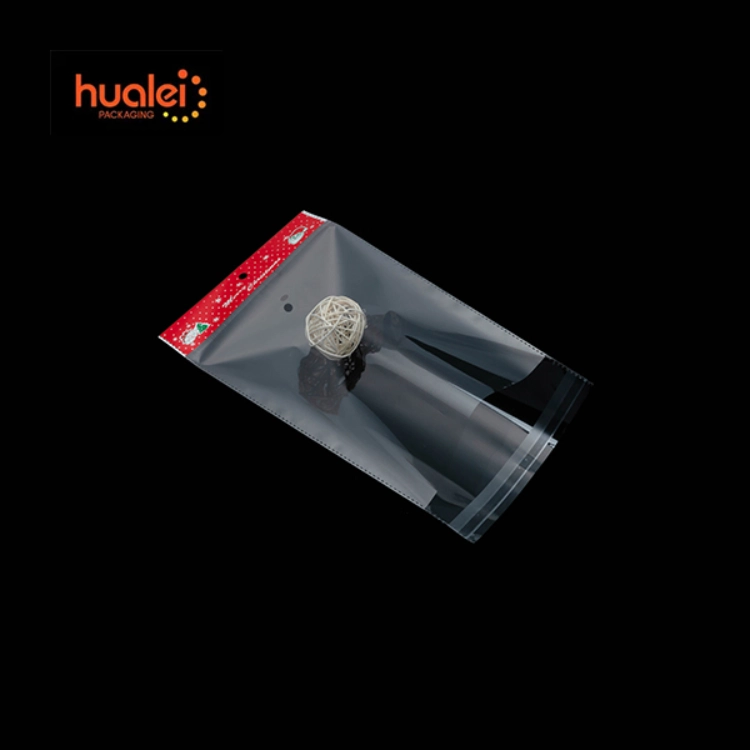
Buyers managing different packaging formats can also review Hualei’s product range rather than using the same structure for every SKU.
OPP card head bags work best when size, film, header, hanging hole, printing, and product weight are specified together. A physical sample should then be tested on the real display fixture before bulk production.
If your project still needs decisions on usable bag dimensions, header size, hole format, film thickness, or artwork position, prepare the packed-product dimensions and display information before you contact Hualei. This gives both sides a clearer basis for sampling and production discussion.
FAQ
Q: What thickness should I choose for OPP card head bags?
A: There is no single thickness for every application. Hualei lists 17, 22, 25, 30, 35, 40, 45, and 53 micron options. Product weight, edges, handling conditions, stiffness requirements, and transport conditions should all be considered before the final thickness is approved.
Q: How do I measure an OPP card head bag correctly?
A: Measure the complete packed item, including backing cards, labels, inserts, and accessories. Separate the usable bag area from the card head and sealing section rather than treating total bag length as usable product space.
Q: Can OPP card head bags be customized for different retail hooks?
A: Yes. Hualei supports custom sizing, logo or design printing, and different hanging-hole formats. The final hole style and position should be checked against the actual retail fixture before bulk production.