
We look for more than nice print in packaging of building materials packed in BOPP bags. Cement-based powder, tile adhesive, dry mortar, grout, mineral additives and parts of hardware as well as other heavy materials are examples of products packed in BOPP bags. Every product puts a different load on the packaging in terms of pressure, abrasion, dust, moisture and stacking.
Many errors are made by treating the BOPP film as the main load bearing component of the sack. BOPP is a good printing surface providing good gloss, clear and exposed graphics and surface protection. Heavy loads however require a PP woven body, an inner liner and reinforced seams. Thickening up the BOPP film does not necessarily transform a light weight packaging film into a heavy duty sack.
The correct product specification starts with the product weight, product density, filling method, closure type, transportation route and storage conditions. Subsequently, the film, product packaging, printing, laminating and seam areas are specified as one complete packaging item.
If you are comparing similar polypropylene materials, the guide to OPP film vs BOPP film explains how clarity, stiffness, sealing, printing, and converting requirements affect film selection.
What Role Does BOPP Play in Building Material Packaging?
BOPP Creates a Printable and Protective Outer Surface
BOPP is the acronym for Biaxially Oriented Polypropylene film. During the production process, the polypropylene film is stretched in two directions. This process increases the film’s tensile strength, stiffness, and above all dimensional stability as well as its transparency and gloss. This film is ideal for packaging purposes where a clear printed film is required.
Building material packaging often carries more information than ordinary retail packaging. The surface may need to show the product name, grade, net weight, application, mixing instructions, safety warnings, batch number, production date, storage conditions, and manufacturer details. BOPP provides a suitable surface for presenting that information clearly.
The film can also help protect graphics from ordinary dust, moisture exposure, and friction during handling. Its exact role must still be defined. BOPP may be used as a printed outer layer, a laminated component, a bag-making film, or a protective wrap around smaller building accessories. These applications do not require the same thickness, sealing method, or supporting structure.
The Supporting Structure Carries the Heavy Load
When the contents are heavy, a stronger body is normally responsible for load-bearing performance. In many industrial packages, PP woven fabric provides tensile and stacking strength while BOPP creates the printed outer surface. This type of construction is often described as a BOPP-laminated PP woven bag.
The distinction becomes important when a package holds 10 kg, 20 kg, 25 kg, or more. BOPP film may have good tensile properties, but that does not mean it should replace woven fabric in every heavy-duty application. The package also has to survive filling, lifting, palletizing, transport vibration, warehouse stacking, and repeated handling.
Particle shape also changes the risk. Fine powder may leak through small openings or contaminate the sealing area. Angular granules may rub against the inner surface. Hardware components or sharp tile accessories can create concentrated puncture points. The package should therefore be designed around the actual material rather than the general phrase “building product.”
How Should Buyers Specify the Film and Bag Structure?
Begin With the Contents and Handling Conditions
Film thickness should not be the first number on the quotation request. Buyers should begin by providing the product name, net weight, bulk density, particle form, filled dimensions, filling temperature, filling speed, stacking height, storage period, and transport method.
Bulk density affects the shape of the filled bag. Two materials may have the same net weight but occupy different volumes. A dense powder may create a compact and rigid package, while a low-density material may produce a larger bag that shifts more during handling. That movement can increase rubbing along the side panels and pressure near the bottom seam.
The filling method matters as well. Manual filling, automatic filling, valve filling, and open-mouth filling place different demands on the package opening and closure. A heat-sealed bag does not behave exactly like a sewn sack, and a valve bag has its own filling and dust-control requirements.
The quotation should also explain whether the package will be stored indoors, inside an open warehouse, or outdoors. Humidity, condensation, sunlight, rain, and temperature changes can affect the print, lamination, closure, and contents. A glossy surface alone does not prove that the complete package is weather-resistant.
Do Not Use BOPP Thickness as a Load Rating
BOPP thickness affects stiffness, surface feel, print quality, machinability, and some aspects of puncture resistance. It is not a complete load-capacity rating.
The finished package depends on the woven fabric or supporting substrate, laminate bond, adhesive, seams, bottom design, closure, dimensions, and filling conditions. A thicker BOPP surface cannot correct a weak bottom seam or an under-designed woven body. It may even create unnecessary cost or excessive stiffness when the supporting structure already supplies sufficient strength.
A lighter film can be reasonable when its primary task is printing and surface protection. A heavier film may be useful when the outer surface faces more friction or puncture risk. The correct choice should be confirmed through a converted and filled sample, not by comparing micron figures in isolation.
Moisture-sensitive powders or very fine materials may also require an inner liner or sealed inner layer. The liner can help contain dust and reduce moisture entry, but its material and closure must suit the filling equipment. The outer BOPP layer and inner liner should therefore be specified together rather than purchased as unrelated components.
How Should Printing and Lamination Be Planned?
Create the Information Layout Before Designing the Graphics
The artwork should begin with the information that must remain readable. Product grade, net weight, mixing ratio, safety warnings, storage instructions, batch coding, and manufacturer details need clearly defined positions.
Important text should not cross bottom folds, side gussets, valve areas, sewn closures, or heat-seal zones. Pallet straps and repeated friction between stacked bags can also damage graphics. The artwork should therefore be reviewed on the shape of a filled bag, not only as a flat digital proof.
A printed sample may look clean before filling but change after the package expands. Text near a fold may become distorted, while graphics near the bottom can disappear underneath the product. Variable information, including batch numbers and dates, should be placed where the coding equipment can reach the surface and where workers can read it after stacking.
Match the Film, Ink, Adhesive, and Converting Process
BOPP, ink, adhesive, and lamination must work as one converting system. Untreated BOPP has relatively low surface energy, so suitable surface treatment is important when ink or adhesive must form a stable bond.
The converting temperature also matters. If the film is exposed to heat during sealing or later processing, the ink and adhesive must tolerate that temperature. An unsuitable system may cause print transfer, bubbling, edge lifting, or delamination near the closure.
Buyers should ask how the material will be printed, laminated, cured, sewn, sealed, and coded. Print adhesion should be checked after the package is filled and handled. A flat color proof confirms the design and shade, but it does not show how the finished surface will react to weight, friction, compression, or humidity.
For buyers sourcing printed film for further converting, BOPP Roll Film03 is listed for bag making, wrapping, heat sealing, and custom printing. Its published options include widths from 5 cm to 180 cm and thicknesses from 17 to 53 microns. These specifications can support the film portion of a custom project, but they do not establish the load capacity of a completed building material bag.
What Should Be Tested Before Bulk Production?
Test the Bag With the Actual Product
An empty package can appear suitable and still fail after filling. Testing should use the real building material whenever possible. If that is not practical, the test material should have a similar weight, bulk density, particle shape, and movement inside the bag.
Observe the package during filling. Dust may contaminate the seal, the mouth may stretch, or the filled dimensions may not match the original drawing. The product may also settle after several hours, changing the bag shape and pallet arrangement.
A filled-bag drop test should cover several orientations, including the bottom, side, and corners. The purpose is not only to check whether the bag bursts. Buyers should also look for seam distortion, pinholes, laminate separation, print scuffing, bottom bulging, and powder leakage.
Normal movement between the filling line and warehouse should be included. Repeated conveyor contact, short-distance dragging, manual lifting, pallet movement, and transport vibration may cause more realistic damage than one dramatic drop.
Check Stacking and Storage Performance
The lowest bags on a pallet carry more compression than the top bags. A package may survive filling and delivery to the warehouse but gradually deform after several days under load.
The stack test should reproduce the planned pallet pattern, stacking height, and storage period. Inspect the lower layers for widening, corner abrasion, laminate lifting, surface blocking, print transfer, and closure stress. Areas touched by pallet straps should receive additional attention.
Humidity and temperature should also match the expected market. If the package will be stored outdoors or in a semi-covered warehouse, the test should include likely moisture and temperature exposure. BOPP can improve surface protection, but the seams, folds, closure, and laminate edges remain possible entry points.
The final approval sample should be produced under conditions close to bulk manufacturing. A hand-made sample can confirm size and artwork, but it may not reproduce production speed, web tension, adhesive curing, or heat-sealing pressure. The approved specification should record the film, thickness, substrate, dimensions, print colors, adhesive, lamination, closure, coding area, packing method, and test results.
Which Hualei Products Match the Film Portion of the Project?
Roll Film03 Supports Printing and Further Converting
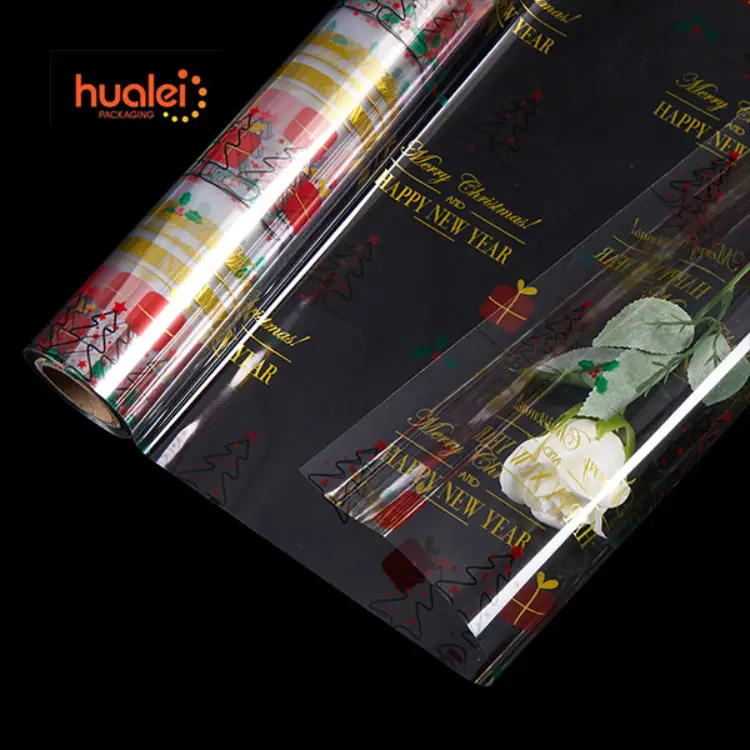
BOPP Roll Film03 with customizable printing and thickness is presented for bag making, heat sealing, wrapping, and retail packaging. The product page lists widths from 5 cm to 180 cm and thicknesses of 17, 22, 25, 30, 35, 40, 45, and 53 microns.
For building material packaging, this product should be evaluated as the film component rather than automatically treated as a complete heavy-duty sack. The buyer still needs to specify whether the BOPP film will be laminated to PP woven fabric, another film, paper, or a different substrate.
Roll Film04 Provides Another Custom Printable Option
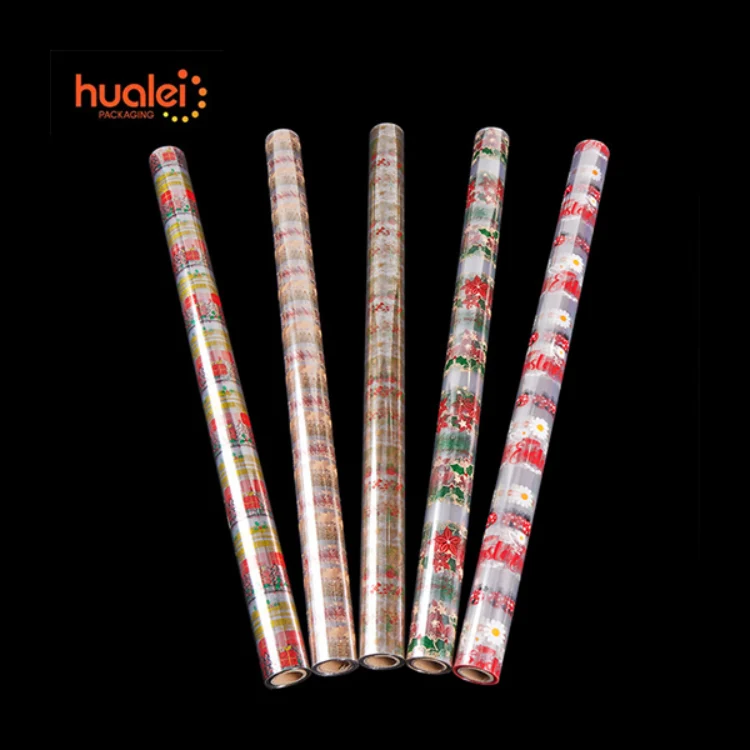
BOPP Roll Film04 for clear printing and heat-sealed packaging offers a similar published range of widths and thicknesses, together with custom logo and design printing. It may be considered when a clear surface, product information, and customized graphics are priorities.
The published product information does not provide a universal load rating for a finished building material bag. Buyers should send the complete proposed structure, contents, weight, closure, and handling requirements before selecting the film.
Additional OPP bags, roll films, zipper bags, and other packaging products are available through the Hualei product range. Buyers comparing manufacturing and customization factors can also read the BOPP roll film supplier guide.
Yiwu Hualei Packaging lists BOPP bags, PE bags, CPP bags, printed bags, zipper bags, flower film, and BOPP film among its main product areas. More company information is available on the Hualei About Us page. For a building material project, buyers can send the proposed structure and filling conditions through the Hualei contact page to confirm whether the required film or converted packaging component can be supplied.
Conclusion
BOPP adds printability, gloss, product identification, and surface protection to building material packaging. It should not be treated as the only source of strength when the contents are heavy, abrasive, dusty, or stored in high stacks.
Begin with the product weight, density, filling method, closure, stacking plan, and storage environment. Then match the supporting structure, BOPP film, printing, lamination, and sealing process.
Film thickness can support the design, but it does not replace filled-bag testing. Bulk production should begin only after a production-representative sample has passed handling, drop, stacking, print, and storage checks.
FAQ
Are BOPP Bags Suitable for Heavy Building Materials?
BOPP can be used as the printed or laminated outer layer of a heavy-duty building material package. Heavy products normally require a supporting body designed for the load, such as PP woven fabric or another suitable substrate.
Does Thicker BOPP Film Automatically Increase Bag Capacity?
No. Thicker film may improve stiffness, surface durability, and some puncture resistance, but bag capacity also depends on the supporting substrate, laminate bond, seams, closure, dimensions, and handling conditions.
Should a Building Material Bag Have an Inner Liner?
Fine powders and moisture-sensitive materials may benefit from an inner liner or sealed inner layer. The correct liner depends on the product, filling equipment, closure, storage conditions, and required moisture protection.
What Information Should Buyers Send for a Quotation?
Send the product type, net weight, bulk density, particle shape, filled dimensions, filling method, closure, stacking plan, storage environment, bag structure, film thickness, artwork, coding requirements, quantity, and destination market.
Can Hualei Roll Film Be Used as a Complete Heavy-Duty Bag?
Hualei’s published pages describe customizable BOPP roll film for printing, bag making, wrapping, and heat sealing. They do not provide a universal heavy-duty filled-bag capacity. The complete structure and actual load should be reviewed and tested before production.