
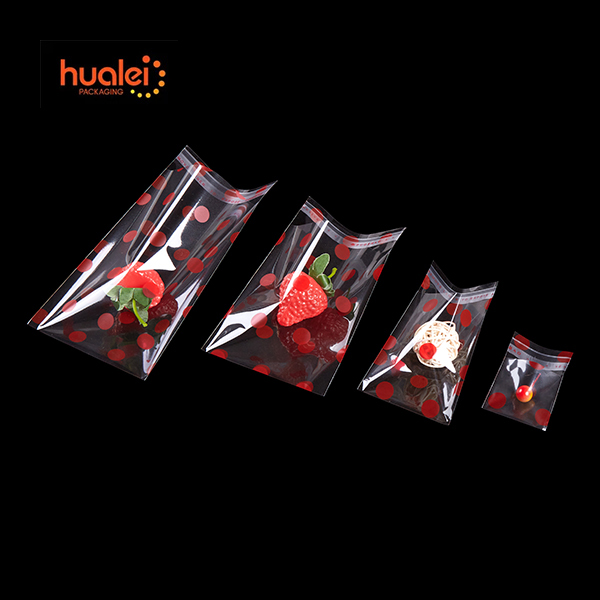
Printed self-adhesive OPP bags are clear OPP bag packaging made from printable film, which is supplied with an adhesive flap. The OPP bag is opened, product placed inside, release strip peeled off and then the flap folded down and pressed closed. The simple nature of the OPP bag is ideal for retail packaging as it allows product to be clearly visible and printed graphics/ logos can be applied to the bag. Also, unlike sealed OPP bags, OPP printed self-adhesive bags do not require separate tape for each pack.
That is why this type of OPP bag packaging works well for jewelry, gifts, accessories, socks, stationery, small apparel items, and many other light retail goods. The real question is not whether an OPP bag looks clear. You need to know whether the size, film thickness, printing area, and adhesive structure fit the product you actually sell.
What Are Printed Self-Adhesive OPP Bags?
A printed self-adhesive OPP bag is not very complicated. That is part of its value. This creates a useful package for retail display or for packing individual orders. The OPP or BOPP film body, printed information or decoration and the flap with adhesive near the opening of the bag combine to provide a protective bag with real value.
If you are still deciding what OPP bag packaging is, it helps to look at the structure rather than the name.
How OPP Bag Packaging Combines Clear Film, Printing, and an Adhesive Closure
A transparent film allows customers to see products in packaging without having to open the package. For products like jewelry, accessories, stationery, socks and gifts, color, finish, pattern and shape all can affect purchase decisions, so visibility in packaging is important.
Printing adds the information the clear film cannot provide on its own. You can use a logo, small pattern, size mark, product information, or another design. The adhesive flap handles the final step. Once the item is inside, you peel the liner, fold the flap, and press the seal into place.
That makes self adhesive OPP bags quite practical when you are packing the same type of item repeatedly.
How Printed OPP Bags Differ from Plain OPP Packing
Plain OPP packing is fine when all you need is a clean transparent cover. It keeps the product together and helps protect it from dust and handling.
Printed OPP bags have another job. They let the packaging carry part of the product presentation.
You do not need to cover the whole film with ink. In fact, for many retail products that would defeat the purpose of using a clear bag. A small logo, repeating pattern, or printed area around the edge often makes more sense. The product stays visible, while the package still looks like it belongs to your product line.
This is one reason custom printed OPP bags are useful for stores with several SKUs. You can keep the basic packaging structure similar while changing the artwork, product mark, or pattern.
Why Are Printed Self-Adhesive OPP Bags Useful for Retail Packaging?
Retail packaging gets handled more than people sometimes expect. Goods move from the packing table to cartons, warehouses, displays, and eventually the customer. The bag needs to stay neat through that process without making packing unnecessarily slow.
Printed self adhesive packaging works well when visibility and simple handling matter more than heavy protective structure.
Clear Product Visibility with Space for Printed Branding
With opp retail packaging bags, the clear area lets the product do most of the visual work. A shopper can see the actual item rather than relying only on a picture printed on a box or label.
Printing then fills in what is missing. You might put a logo in one corner, use a small decorative pattern, or print information that helps separate one size or product line from another.
The balance matters. More printing is not automatically better. Covering most of the bag with your print when selling small products like necklaces or decorative accessories can make the products difficult to see in your bag. Deciding how much of the products need to be visible first and then planning the print area to fit the rest is usually the best approach.
Faster Self-Adhesive Sealing without Extra Tape
The adhesive flap is a small detail, but you notice it when the packing volume increases.
With a bag that needs separate tape, each pack adds another handling step. Somebody has to pull the tape, cut it, position it, and press it down. With self adhesive packaging bags, the closure is already built into the bag.
You insert the product, peel the release strip, fold the flap, and seal it.
For wholesale, retail, and e-commerce packing, this also helps keep the finished packs more consistent. The flap closes in roughly the same place each time instead of having tape positioned differently from bag to bag.
Which Products Work Well with Printed Self-Adhesive OPP Bags?
Not every item belongs in this type of package. OPP packaging bags make the most sense when the product is fairly light, does not need heavy cushioning, and benefits from being seen.
Once you look at the product this way, choosing the bag becomes much easier.
Jewelry, Gifts, Accessories, and Small Retail Products
Small jewelry, rings, earrings, bracelets, small gifts, decorative accessories, craft products, and promotional items are good fits.
These products are usually small enough that bulky packaging adds more material than you need. At the same time, you still want the item clean and easy to display.
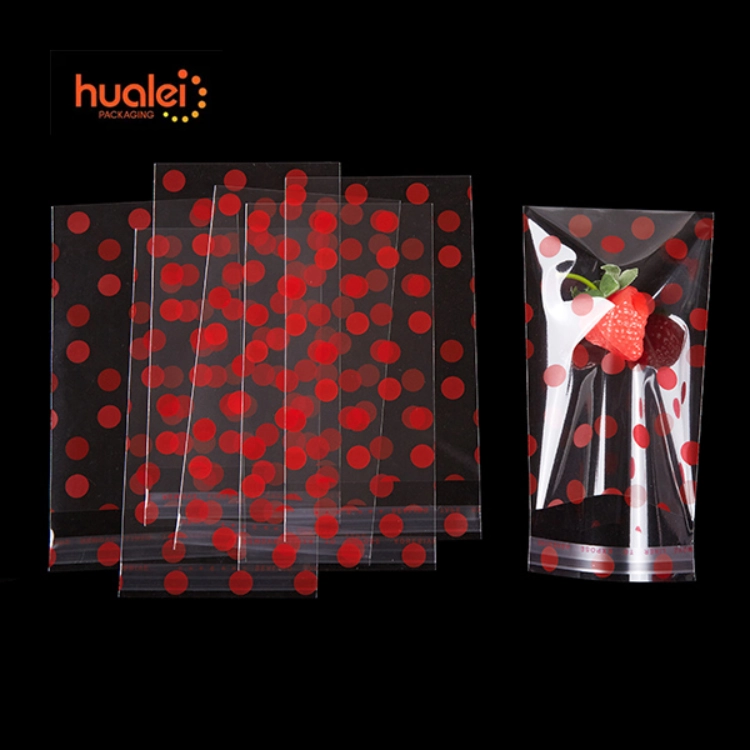
A printed clear bag solves that fairly neatly. You can show the product through the film while using printed decoration around it. This is also where a product such as OPP bag polka dot printing makes sense. The printed pattern adds some visual detail without turning the package into an opaque bag.
Apparel, Stationery, and Other Clear Retail Display Products
Socks, underwear, small apparel items, cards, stationery, paper products, and other light goods can also use this style of OPP bag packing.
These items often need more protection from dust and repeated handling than from impact. Clear film also helps a buyer check color, pattern, or product condition quickly.
There are limits. If the item is heavy, sharp, or needs cushioning, a thin printed OPP bag may not be enough. The same applies when a product needs a special barrier structure. The product should decide the packaging, not the other way around.
How Should Buyers Choose Printed Self-Adhesive OPP Bags?
Once you know the product suits this packaging format, start with the physical fit. Printing comes later.
This order matters because a great-looking bag is still the wrong bag if it is difficult to fill, too loose around the item, or too thin for normal handling.
Bag Size, Film Thickness, and Product Fit
Measure the product in the form you will actually pack it. A folded item and an unfolded item can need very different finished bag sizes.
Then allow room to insert the product without forcing the side seals. You also need enough flap length for the adhesive area to fold naturally.
Film thickness should match product weight, size, edges, and handling. The OPP bag polka dot printing is available in thickness options from 17 mic to 53 mic, with sizes including 3 × 4 + 2 cm, 4 × 4 + 2 cm, 6 × 7 + 2 cm, 7 × 9 + 3 cm, 8 × 10 + 3 cm, and 12 × 15 + 3 cm.
That range gives you room to match small products rather than forcing several different items into one standard bag.
Printing Area, Adhesive Position, and Edge Sealing
After the basic size is right, look at printing.
Check logo size, print position, clear display area, pattern placement, flap length, adhesive position, and finished dimensions together. If one of these changes, the visual result can change too.
A sample should be tested with the real product inside. Do not only inspect the print while the bag is empty. Close the flap, check whether the product fits cleanly, look at the side seals, and make sure the printing still sits where you expected.
That is especially useful for custom OPP packaging that will be reordered later. The approved sample gives you something practical to compare with future production.
How Does OPP Bag Polka Dot Printing Work for Retail Packaging?
For small goods, OPP bag polka dot printing is a simple example of how printed OPP bags can combine display and branding without adding much packaging structure.
It uses transparent BOPP film, a printed polka dot design, and a self-adhesive closure. Custom logo and design printing can also be used when you want the packaging to match your own retail line.
Why OPP Bag Polka Dot Printing Fits Small Retail Products
The smaller size range makes the bag especially useful for jewelry, gifts, accessories, and similar products.
You are not buying a large general-purpose bag and leaving most of it empty. You can choose a closer size, then decide how much film strength you actually need.
The printed pattern also shows why clear printed OPP bags can work well in retail. The decoration does not need to hide the item. You can use the print as a frame around the product rather than making it the whole package.
How Custom Printing Can Support Different Retail Product Lines
You are also not limited to one decorative approach.
A jewelry range may use a small logo and leave most of the bag clear. Gift products can carry more decorative printing. Accessories can use different patterns to separate collections. If you sell several related SKUs, similar bag structures with adjusted artwork can make the range look more consistent.
Yiwu Hualei Packaging Co., Ltd. has worked in flexible plastic packaging since 1998 and produces BOPP bags, PE bags, CPP bags, printing bags, zipper bags, flower film, and BOPP film. The company operates 50 flexible packaging production lines and supports different bag sizes, thicknesses, and customer printing requirements. You can also check its wider packaging product range or read more about the company’s manufacturing background before deciding which bag format fits your order.
Conclusion
Printed self-adhesive OPP bags are useful because they keep retail packaging fairly simple. You get a clear view of the product, space for printing, and a built-in adhesive closure in one bag. For jewelry, gifts, accessories, stationery, socks, and other light retail products, that combination can be more practical than adding separate labels, tape, and heavier outer packaging.
The main thing is to match the bag to the product. Check size first, then thickness, flap space, adhesive position, edge sealing, and printing area. For small retail items, Yiwu Hualei Packaging Co., Ltd.’s OPP bag polka dot printing gives you a ready example of clear printed OPP packaging with self-adhesive sealing and custom printing options. For customization service, quotation details, or order questions, you can review the company’s packaging options and contact the team before confirming bulk production.
FAQ
What Is OPP Bag Packaging?
OPP bag packaging uses oriented polypropylene film to make clear packaging bags for retail and product packing. Depending on the bag structure, it can include printing, self-adhesive flaps, hanging features, or other custom details.
Are Self-Adhesive OPP Bags Suitable for Retail Packaging?
Yes, especially for light products that benefit from clear display. Jewelry, gifts, accessories, stationery, socks, and small apparel items are common examples. The self-adhesive flap also makes repeated packing easier.
Can OPP Bags Be Custom Printed with a Logo?
Yes. Printed OPP bags can carry logos, decorative patterns, product information, or other artwork. It is better to confirm the transparent display area and print position before bulk production so the design does not cover the product unnecessarily.
How Do Buyers Choose the Right OPP Bag Thickness?
Start with the product weight, dimensions, shape, and expected handling. A small smooth item may use a lighter film, while a larger or less regular product can need more strength. Test the actual product in a sample before deciding.
What Products Are Best Packed in Printed Self-Adhesive OPP Bags?
They work well for jewelry, gifts, accessories, craft products, stationery, socks, lightweight apparel, and other small retail goods. Heavy, sharp, or impact-sensitive products may need a different packaging structure with more protection.