
You often see PP bags and BOPP bags being quoted for packaging. Most of the time suppliers even use these two terms to refer to clear PP packaging bags that seem to be identical.
BOPP film and general PP bags are related materials, but by no means do they behave identically. Both are made from polypropylene, but film is produced differently than bags. BOPP film is stretched in two directions to produce a very clear, stiff and stable film. A general PP bag, on the other hand, is a soft package that can easily bend around a product.
For daily packing work, that difference is easy to notice. A folded up shirt can form a nice package in a soft PP-bag. However, the same package will probably look a lot flatter and even cleaner in a BOPP-bag. It is not that easy to determine what is best, because it depends on a number of factors, i.e. the product, the way of sealing, the thickness of the bag and how the packaged product will be sold or distributed.
What Do PP Bags and BOPP Bags Actually Mean?
PP is short for polypropylene. It is a base material used in many kinds of packaging, from thin clear film to woven sacks. So when a quotation only says “PP bag,” there is still quite a lot left unanswered.
BOPP means biaxially oriented polypropylene. It is still PP, but the film has gone through an extra stretching process. That process changes how the film feels and performs.
PP Bags as a Broad Packaging Category
The name PP bag can cover several products. This could be a soft cast polypropylene bag, a standard polypropylene film bag or even a woven PP bag for heavier articles. All of these products are very different in terms of transparency, thickness and load capacity.
This is why buyers should not compare price by material name alone. One supplier may quote a flexible film. Another may quote a stiff clear film. Both quotations may still use the words “PP bag.” Before approving a sample, ask for the exact material structure and check that the same wording appears on the order sheet.
How Biaxial Orientation Changes BOPP Film
During BOPP film production, the film is stretched lengthwise and sideways. The molecular structure of BOPP material becomes more ordered. In practical terms, the film becomes stronger in tension, more transparent, and less likely to stretch out of shape.
It also becomes less soft. BOPP film can feel crisp in the hand, especially at higher thicknesses. This is useful for retail packaging, though it also means sharp product corners and weak bag edges need attention. A strong film with a poor side seal can still fail.
How Do PP Bags and BOPP Bags Differ in Performance?
The easiest way to compare PP bags vs BOPP bags is to look at the part of the job each material handles well.
| Comparison Point | General PP Bags | BOPP Bags |
| Base Material | Polypropylene | Polypropylene |
| Film Process | Non-Oriented or Differently Processed | Biaxially Oriented |
| Transparency | Clear to Translucent | Usually Highly Clear |
| Surface Feel | Softer | Firmer and Smoother |
| Flexibility | Higher | Lower |
| Stiffness | Lower | Higher |
| Shape Retention | Moderate | Better |
| Printing | Depends on Surface Treatment | Good after Proper Treatment |
| Sealing | Depends on Material Grade | Needs a Suitable Seal Layer or Closure |
| Common Use | Flexible General Packaging | Clothing and Retail Display Packaging |
A table gives the basic answer, but samples tell you more. Film quality, bag-making accuracy, sealing temperature, and thickness all change the final result.
Clarity, Gloss, and Product Visibility
BOPP bags are commonly chosen because the product inside remains easy to see. With clothing packaging, this saves time. Warehouse staff can check color and style without opening every bag. Retail customers can also see the fabric and printed design.
General PP film can be clear as well, though it may not have the same glass-like finish. That may be perfectly fine when the bag mainly keeps out dust or separates products inside a carton. High gloss is useful, but not every order needs it.
Flexibility, Stiffness, and Tear Behavior
A softer PP bag can wrap around an uneven product with less tension at the corners. It also tends to cope better with repeated bending. For products that do not need a flat display, that flexibility can be more useful than stiffness.
BOPP bags hold their shape better. Folded garments sit neatly inside, and the bag does not sag as much. Still, BOPP is not difficult to damage if the specification is too light. When sharp edges like zippers, metal buttons, buckles or rough seams are in contact with the film, it is better to use a thicker bag or a larger size.
Printing, Sealing, and Closure Options
BOPP film gives a clean surface for logos, warning text, barcodes, and product information once the surface has been treated correctly. Printed colors can look sharp because the film is smooth and clear.
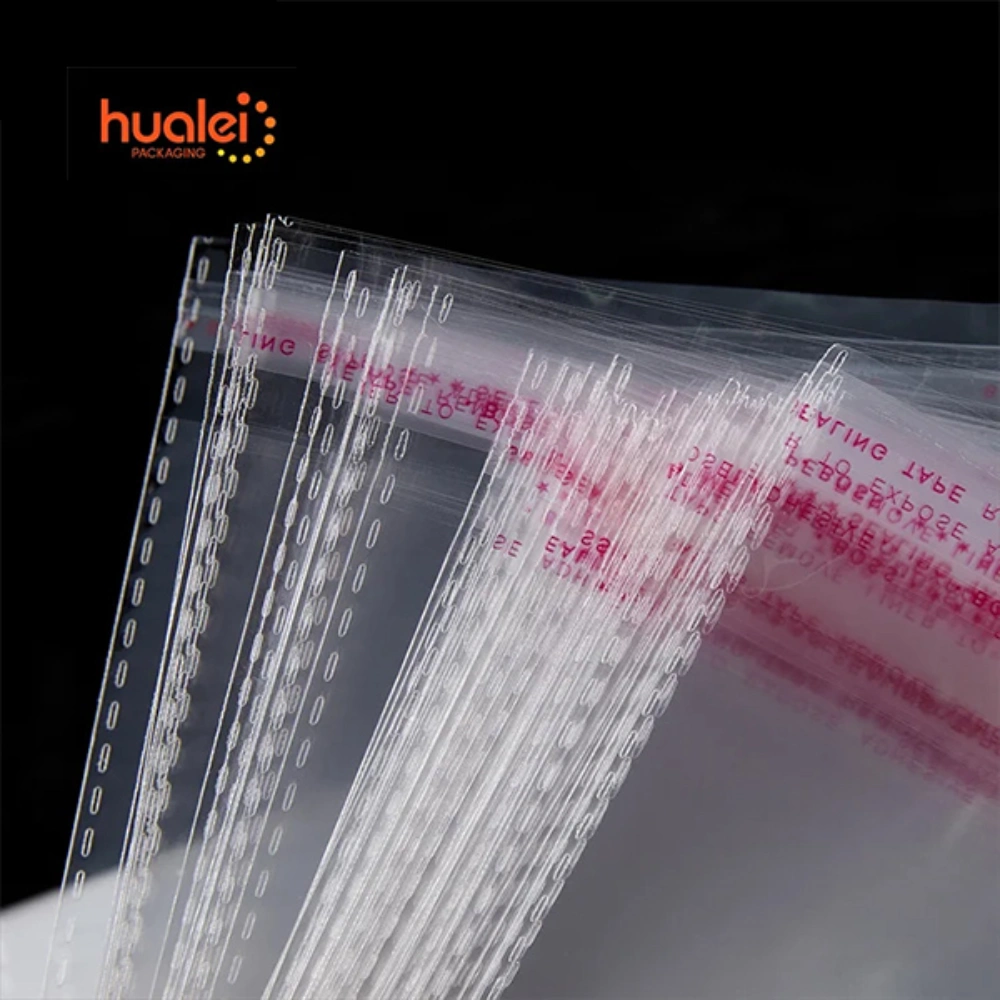
Sealing needs a separate check. Ordinary BOPP film is not always made for direct heat sealing. The bag could be made with a coated heat-seal layer, a laminated structure or a self-adhesive flap. For clothing orders, we use self-adhesive bags as they do not require an additional machine to pack or extra tape.
Which Material Fits Different Packaging Applications?
A buyer may use PP bags for one product and BOPP bags for another. That is normal. Packaging should follow the product rather than the other way around.
When General PP Bags Work Better
General PP bags suit products that need a little more flexibility. Soft goods, odd shapes, or items that press against the sides of the bag may be easier to pack in a film that gives slightly.
Heavy packaging is another matter. Woven PP sacks are used for larger loads, but they should not be compared with thin BOPP clothing bags. They share the same base polymer, though their construction and purpose are completely different.
When BOPP Bags Improve Retail Presentation
BOPP bags make sense when buyers care about neat presentation. Clothing, stationery, gifts, small accessories, and printed products are common examples. The clear film keeps the item visible, while the stiffness helps the package stay flat.
This also helps with stock control. A worker can identify a shirt color, size label, or product code without opening the package. For e-commerce sellers, the product arrives in a bag that looks ready for the customer rather than like an inner shipping liner.
Why Clothing Packaging Often Uses BOPP Film
Clothing does not usually need a heavy barrier film, but it does need protection from dust, handling, and moisture during storage. BOPP film covers those basic needs while still showing the item clearly.
Film thickness should follow the garment. Underwear and thin T-shirts do not place much pressure on the bag. Jeans, slippers, jackets, or clothing with harder trims are different. They can pull at the side seals and corners. The safest way is to test a filled bag, not an empty one.
Why Does OPP Bag Clothing Suit Apparel Packaging?
Yiwu Hualei Packaging Co., Ltd. has worked in flexible plastic packaging since 1998. The company runs 50 production lines and manufactures BOPP bags, PE bags, CPP bags, printed bags, zipper bags, flower film, and BOPP film. Buyers can check the wider product range when one bag type does not fit every item in an order.
For this comparison, OPP Bag Clothing is a useful example. The product name uses OPP, while the material specification states BOPP film. This kind of naming is common in the packaging market. It is another reason to read the product details rather than depend only on the category name.
BOPP Film for Clear Garment Display
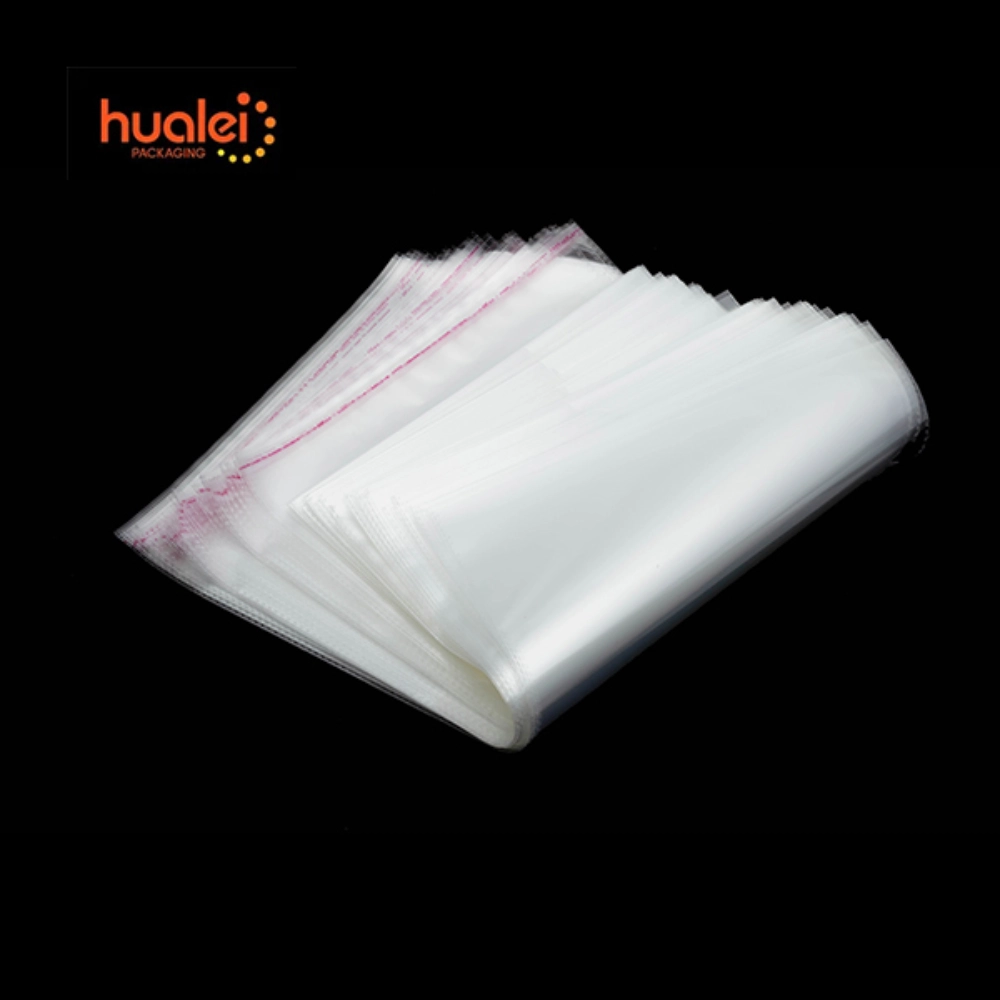
OPP Bag Clothing is used for T-shirts, jeans, slippers, underwear, and other garments. The BOPP film is clear enough for quick product checking and keeps the clothing away from dust during storage and handling.
The bag also gives folded products a tidier shape. This matters when several pieces are stacked in a carton or displayed on a retail shelf. A loose bag can make the garment look badly folded even when the product itself is fine.
Size and Thickness Options for Different Garments
The available sizes include 18 × 30 + 4 cm, 22 × 32 + 4 cm, 25 × 36 + 4 cm, 28 × 41 + 4 cm, 30 × 44 + 4 cm, 32 × 46 + 4 cm, 35 × 46 + 4 cm, and 40 × 60 + 4 cm.
Thickness runs from 17 mic to 53 mic. A buyer packing light underwear may start with a thinner option. Jeans or bulkier clothing normally need more support. Long-distance shipping, tight carton packing, and rough handling can also push the choice toward a thicker film.
There is no benefit in paying for the heaviest option when a lighter specification already works. At the same time, reducing thickness too far often causes more trouble than the small saving is worth.
Self-Adhesive Closure and Custom Printing
The self-adhesive OPP Bag Clothing can be closed by removing the release strip and folding the flap. Packing is quick, and no extra adhesive tape is required.
Custom logos and designs are available as well. For a clear clothing bag, it is usually better not to cover the whole surface. A logo, size information, warning notice, or small printed area leaves enough space for the garment to remain visible.
What Should Buyers Confirm Before Ordering in Bulk?
The sample may look simple, but a bulk order has several details that need to stay fixed. If one of them changes, the bag can feel quite different.
Exact Material and Film Structure
Write the material clearly. State whether the order uses BOPP film, CPP, general PP film, woven PP, or a laminated structure. “Transparent PP bag” is not specific enough for production.
The approved sample, quotation, purchase order, and production record should use the same material name. This makes it easier to check the goods when they arrive.
Finished Size and Film Thickness
Measure the folded product, not the garment before folding. Add enough room for loading and closing the bag. If the fit is too tight, workers may stretch the opening and damage the side seals. If it is too loose, the garment moves around and the package looks untidy.
Film thickness should be tested together with size. A slightly larger bag may reduce pressure on the film, while a smaller bag may need more thickness. These two specifications should not be decided separately.
Seals, Printing, Samples, and Carton Packing
A proper sample check should include the adhesive flap, side seals, print adhesion, opening size, and bag edges. Put the actual garment inside. Close it and leave it packed for a while.
Then place several filled bags in a carton. This shows whether the film wrinkles badly, whether the adhesive opens, and whether hard garment details cause marks or punctures. Buyers can also review the company’s background, packaging news, and blog content before discussing a custom order.
Conclusion
The difference between PP bags and BOPP bags mainly comes from how the film is made. A general PP bag is usually softer and easier to bend. A BOPP bag is clearer, stiffer, and better at keeping a flat shape.
For clothing packaging, those BOPP features are useful. OPP Bag Clothing gives buyers a choice of sizes, thicknesses, custom printing, and self-adhesive closure. It works for light garments as well as heavier items when the film specification is matched correctly.
Yiwu Hualei Packaging Co., Ltd. can help check the material, bag size, thickness, printing, samples, bulk production, and delivery details, and buyers can send their requirements through the company’s contact page.
FAQ
Q1: What Is the Main Difference Between PP Bags and BOPP Bags?
A1: Both are made from polypropylene, but BOPP film is stretched in two directions, which gives it more clarity, stiffness, gloss, and tensile strength.
Q2: Are BOPP Bags Stronger Than General PP Bags?
A2: BOPP film normally has higher tensile strength, but the finished bag also depends on film thickness, side seals, bag size, and the shape of the packed product.
Q3: Are OPP Bags and BOPP Bags the Same?
A3: The two names are often used in a similar way by packaging suppliers, so buyers should check the actual film specification before placing an order.
Q4: Can BOPP Bags Be Heat Sealed?
A4: Some BOPP films have a heat-sealable layer, while other bags use a coating, lamination, or self-adhesive flap for closing.
Q5: Which Bag Is Better for Clothing Packaging?
A5: BOPP bags are usually a better fit when the clothing needs clear display, a neat packed shape, custom printing, and protection from dust during storage and transport.